Enhancing Battery Energy Storage with Solar Power
- Tristo
- Nov 4, 2025
- 3 min read
Australia's drive towards renewable energy is accelerating, particularly in sectors like mining and infrastructure development where reliable power is essential. By 2025, the nation had emerged as the third-largest market for large-scale battery storage globally. Integrating solar photovoltaic (PV) systems with Battery Energy Storage Systems (BESS) represents a pivotal advancement, enabling sites to harness sunlight for cleaner, more efficient operations.
This approach not only addresses fluctuating energy demands but also aligns with national goals for reducing carbon footprints. Many Australian homes and businesses are already adopting solar panels at a rapid pace, setting the stage for broader industrial applications.
What Does Solar Integration in BESS Entail?
Solar integration involves connecting PV arrays directly to BESS units, allowing excess solar-generated electricity to be stored for later use. This creates a hybrid setup where solar acts as the primary source during daylight hours, with batteries providing backup for evenings or cloudy periods.
In technical terms, solar panels produce direct current (DC) power, which is fed into inverters for conversion to alternating current (AC) if required, then channelled to charge the BESS. Advanced systems optimise this flow, ensuring minimal energy loss and maximum utilisation. For instance, in co-located configurations, BESS enhances grid connections by smoothing out intermittent solar output.
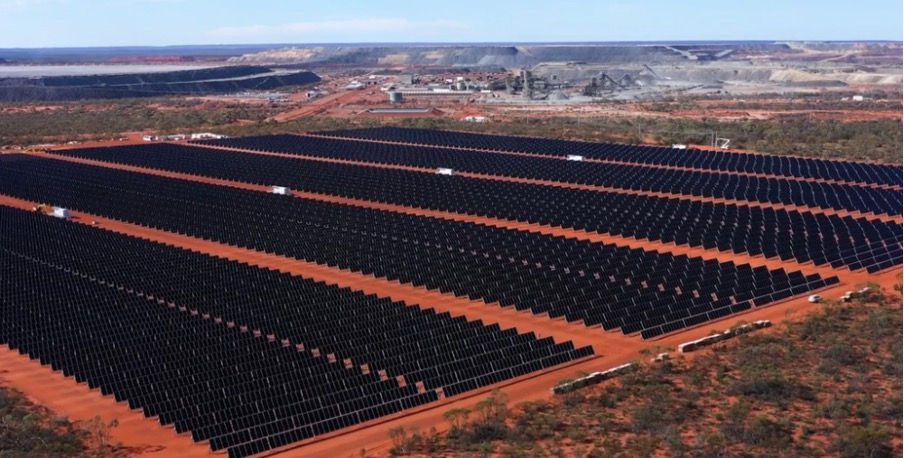
A 24 MW solar farm and 13 MW battery power up a Western Australia mine site.
Key Advantages of This Combination
Pairing solar with BESS offers multiple gains, especially for energy-intensive industries:
Cost Efficiency: Reduces reliance on grid power during peak times, lowering bills through stored solar energy. Businesses can manage consumption effectively, unlocking financial incentives.
Reliability Boost: Batteries "firm" solar power, delivering steady output despite weather variations, which is crucial for grid stability and site productivity.
Environmental Impact: Promotes clean energy by storing renewables, cutting emissions and supporting net-zero targets. It's scalable and deployable in remote areas.
Revenue Opportunities: Through strategies like revenue stacking, BESS can provide grid services, enhancing investment returns.
In Australia, approvals for such projects are streamlining, particularly in the east, as they play a vital role in renewable strategies.

Real-Life Applications in Australia
Several projects highlight the practicality of solar-BESS hybrids:
Mining Operations: A 24 MW solar farm combined with a 13 MW BESS powers a gold mine in Western Australia, reducing diesel dependency and operational costs.
Utility-Scale Initiatives: Queensland's large BESS projects integrate solar to stabilize the grid, with construction advancing on major sites.
Commercial Builds: Sites use portable BESS units with solar panels for temporary power, achieving near-zero emissions for lighting and offices.
These examples demonstrate how integration fast-tracks renewable adoption, making power more predictable and sustainable.


Is Solar-BESS Integration Truly Sustainable?
Absolutely, as it leverages renewables to minimise fossil fuel use. While initial setups require investment, long-term savings and emission reductions make it a green powerhouse. In Australia, this technology is propelling the transition to a low-carbon future, with BESS optimising PV systems for reliable, clean energy.
Ready to Integrate Solar into Your BESS? Connect with Us
As renewable momentum builds, incorporating solar with BESS is a smart move for efficiency and sustainability. Riverstone Advisory has over a decade of experience in powering key industries and guiding them towards greener practices. Our specialists can assess your needs and propose customised solutions. Contact our team today to start your journey.


Comments